Saturday, September 02, 2006

Tsechu Gompa


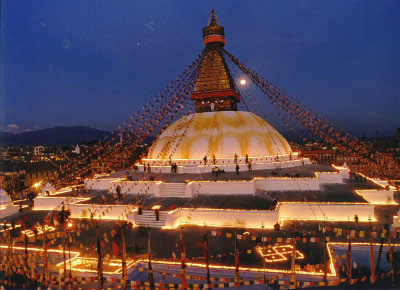
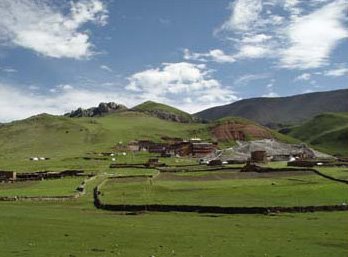
Here's a lovely picture of Tsechu Gompa from Adeu Rinpoche's website.

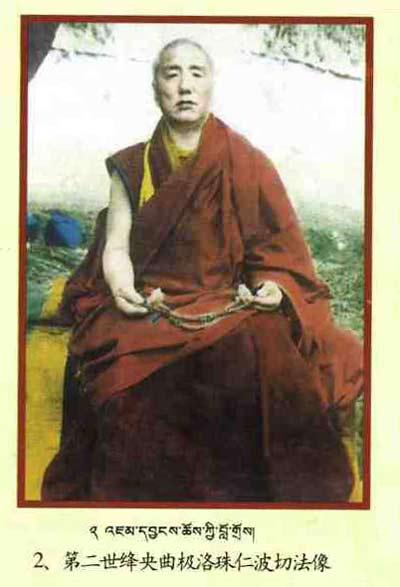
Adeu Rinpoche met Tulku Urgyen when he was quite young as he describes in this excerpt from an interview:

CTF: When did Rinpoche first meet Kyabje Tulku Urgyen Rinpoche?
Rinpoche: The first time I met Tulku Urgyen was when Samten Gyatso came and gave the extensive empowerments of Tukdrub Barchey Kunsel which lasted about an entire month. During this time Tulku Urgyen, we called him Tulku Karma Urgyen, acted as the shrine master and made all the tormas, he was also Samten Gyatso’s attendant together with another servent named Dudul. Another time we met was when Samten Gyatso was giving the Barom Kagyu empowerments and Tulku Urgyen alternated with another as umdze (chant master). On another occasion he came back with his father, Chimey Dorje, his brothers Pema Jigmé and Tenzin Dorje. They all came and it was during this time that I became good friends with Tulku Urgyen.

CTF: Could Rinpoche please tell us what Kyabje Tulku Urgyen was like at that time?
Rinpoche: I was really young, just a kid, and Tulku Urgyen was young too. He seemed to become quite fond of me and, you could say he would act as my babysitter. He was very skilled in different games, we would carve wood together and make drawings and masks. He was quite adept at these sorts of things, so he would distract me by playing with me. Sometimes he would run around with me on his shoulders. His brother, Tendzin Dorje, wasn’t interested in playing any games at all, he would just stay by himself and never do anything, so I never got close to him. But Tulku Urgyen was much more playful.

(read full interview)

Wednesday, August 30, 2006

Tulku Urgyen in Singapore

Lama Sherab Posel was kind enough to send us this picture of Tulku Urgyen that was taken during a trip to Singapore back in 1978.

Tuesday, July 18, 2006

Review of Blazing Splendor on Amazon


This volume is wonderfully fresh and accessible. It is like sitting, listening to stories told by a dear friend or relative. There are charming details, remarkable personal observations of many of the greatest lamas of the late 19th and early 20th centuries, down through Dzongsar Khyentse, Dilgo Khyentse and the 16th Karmapa. A deep theme throughout is that of the "terton", the gifted soul who uncovers "treasures" or "terma" hidden by Padmasambhava to be discovered when the time and times are correct. The author's great grandfather, Chokgyur Lingpa, was one of the last and greatest tertons, and the teachings thus uncovered - how and where they occurred, who was involved, the lineage of those who received these teachings, and so forth - is central to the story. I have found nothing like this in any of the many I've read on Tibet and the Tibetans.
Tulku Urgyen Rinpoche tells stories of these events that go back a considerable ways before he was born, into the 19th century, when Tibet was a world unto itself. He ends the book with a relatively brief description of the work he undertook at the direction of the 16th Karmapa to build a monastery near the great stupa of Boudanath, near Kathmandu, many years after his departure from Tibet in 1955. One sees glimpses throughout the narrative of the coming debacle; remarkable prophecies, side by side with engaging tales of his encounters with masters of the Dharma. It is a unique account, not to be missed, especially by those who seek a deeper understanding of how the great lamas of Tibet in that time lived their lives, related to each other, maintained their lineages and looked forward to preservation of the Dharma in a changed world. Altogether enchanting!
--David Nichols

The temple in Boudha

A little more background and some new pictures from the early '70s (the text is from Blazing Splendor by Tulku Urgyen Rinpoche):
At the Karmapa’s suggestion, I went to Malaysia with three attendants. Our little gang of four robed people were the first Tibetan lamas to visit. The trip lasted three months and I was able to accumulate a fair amount of funds from faithful Chinese Buddhists there.
I had decided to use the money to improve the temple at Nagi Gompa. However, once I got back to Nepal and started conferring with Ram Lal about how best to use the funds, a letter arrived from my two older sons, Chökyi Nyima and Chokling. They were finishing up their studies at Rumtek with the Karmapa and other great masters.
The letter said:

Dear Father and Mother,
The Karmapa has told us both that we must build a monastery. We are too young to do anything about it now, but we have heard that the Chini Lama offered you some land at the Great Stupa. Please build a small monastery there. It doesn’t have to be two stories; one is fine.

The Karmapa hadn’t singled out Chökyi Nyima and Chokling to build a monastery—he had told the same thing to every single tulku and lama at Rumtek that year. Anyway, this is how I embarked on building Ka-Nying Shedrub Ling, the monastery at the Boudha Stupa.
When the building was completed, I thought, “The Karmapa is my ultimate object of refuge; it would be wonderful if he could come and perform the consecration.” So on my next visit to Rumtek, I told the Karmapa, “I have finished building a small monastery in Boudha, and I have great hopes that you will pay it a visit. I am here to request you to go there and give the Treasury of Kagyu Tantric Teachings.”
A little more background and some new pictures from the early '70s (the text is from Blazing Splendor by Tulku Urgyen Rinpoche):
The Karmapa replied, “That is very sweet of you; I will definitely come. You have my word. I need to go to India first, but after that I will come to Nepal.”
He came soon after. He also consecrated the temple and statues at Nagi Gompa. He gave the empowerments and then returned to Rumtek.

Friday, July 07, 2006

Repeating the Words of the Buddha - back in print


In Repeating the Words of the Buddha, Tulku Urgyen Rinpoche unfolds the path to enlightenment, which is simply the gradual uncovering of the awakened state already present in oneself.
With the benevolence and brilliance of a realized being, Rinpoche illustrates in a lucid, humorous fashion the essential points of spiritual practice, inseparable from everyday life.
Tulku Urgyen Rinpoche was among Tibetan Buddhism’s greatest masters of the 20th century, and pivotal in bringing the highest Buddhist teachings to the West.

New and revised edition.
Repeating the Words of the Buddha - webpage

Wednesday, July 05, 2006

Blessings


During a stay at Nagi Gompa in 1994 I had the opportunity to ask Tulku Urgyen the following:

MT: I was wondering if Rinpoche could explain exactly what ‘blessing’ is?

Rinpoche: What people usually consider blessings are what I would call ‘superficial blessings.’ It’s like when you have something you want to get rid of and you ask, “Please bless me to be free from what I don’t like,” whether this is being sick or in pain, evil spirits are attacking you, your business isn’t going that well, etc.. So, people ask for something to wear around their necks, something to eat, maybe some charm to be made and so on. Then when they feel better, the evil spirits are repelled, business is going well or whatever, they say, “I got the blessings.” These are known as ‘superficial blessings.’

On the other hand, the real blessings are the oral instructions on how to become enlightened in a single lifetime, which you can receive from a qualified master. That’s the real kind of blessing.

Monday, June 19, 2006

Tulku Urgyen Rinpoche on "one mind"

At present the state of ordinary people is like pure gold covered with dirt. Our buddha nature is covered by temporary obscurations. One of the main veils that needs to be purified is our fixation on duality, on solid reality. Once it is purified then gold is just pure gold. As long as our mind is confused, bewildered, deluded, and mis­taken, our buddha nature continues to be dragged through the realms of samsara. But when the mind is unconfused, unmistaken, and undeluded, it is the bud­dha nature itself. It is not that the buddha nature is one thing and our mind is another separate thing. They are not two different entities. The undeluded mind itself is the pure gold, the buddha nature. Sentient beings do not have two minds. When the mind is deluded it is given the name ‘sentient being.’ When the mind is undeluded, unmistaken, it is known as buddha.
It is said that “there is no buddha apart from your own mind.” We do not have two minds. There is just one mind which is either deluded or undeluded. The buddha nature is exactly the originally unmistaken qual­ity of our mind, also known as Samantabhadra, the dharmakaya buddha.
--from Repeating the Words of the Buddha

Monday, June 12, 2006

12 Trungpa Tulku receives the New Treasures


Trungpa Rinpoche received the Abhisheka for Terser, an important terma found by the great Terton Chojyur (Chokgyur) Lingpa, given by the current Chojyur Lingpa at Terton monastery near Surmang; this terma has special significance for Surmang, where a drubchen and lama dancing are practiced for it every year. This abhisheka lasted about one and one-half months, after which Trungpa Rinpoche returned to Surmang, where he has been concentrating on his ngondro practice.
From: www.konchok.org/trungpa.html

Saturday, June 10, 2006

Imprint in the Moon Cave


Photo of Padmasambhava's footprint in the Moon Cave at Drak Yerpa. It was taken recently by Nick Dudka.

Friday, May 12, 2006

Chokyi Nyima Rinpoche's Saturday Talks


Back in 1983 Tulku Urgyen Rinpoche's oldest son began a weekly semi-formal gathering centered around a lecture, with questions and answers at the end. Slowly these teachings have become known as the Saturday Talks and are mentioned in many of the travel guidebooks to Nepal. Many of them are being made available to the community of practitioners over the Internet at:
http://groups.yahoo.com/group/gomde/

Summer travel schedule: http://gomde.dk/index.asp?mode=Calendar&language=english

Thursday, May 11, 2006

The film of Milarepa


The father of Tulku Urgyen Rinpoche's reincarnation is not only the incarnation of Neten Chokling, an important lineage master mentioned repeatedly in Blazing Splendor, but also the director of the new and acclaimed film of Milarepa's early life. You can read the interview with him on http://www.milarepamovie.com/film/director.htm

Wednesday, May 10, 2006

Early photo of Dzongsar Khyentse, Jamyang Khyentse Chökyi Lodrö

We are very fortunate to be able to share this old picture of one of the teachers of Tulku Urgyen Rinpoche. It comes from the Kela Chokling Tulku's new website: www.chokling.org (all in Chinese)

Sogyal Rinpoche writes in his Introduction to Blazing Splendor:


I first met Tulku Urgyen Rinpoche when I was very young, because, as he explains in this book, he came many times to receive teachings from my master Dzongsar Khyentse, Jamyang Khyentse Chökyi Lodrö. When, years later, I requested Tulku Urgyen Rinpoche for teachings, he recalled how he had always seen me at the side of Jamyang Khyentse, and our mutual bond through our proximity to this great teacher gave us both a deep feeling of closeness.

Tulku Urgyen Rinpoche said about this master:

When Old Khyentse passed away, the fifteenth Karmapa saw in a vision that instead of just a single reincarnation, twenty-five emanations would appear, each embodying one of the twenty-five aspects of fruition: five each for enlightened body, speech, mind, qualities, and activity. Among these, five principal incarnations were recognized and enthroned. That’s why we see so many reincarnations these days with the name Khyentse.
It is said that the activity of these amazing Khyentse incarnations is unceasing, like the moon rising when the sun sets: when one passes away, another appears in his place. When he died, several tulkus appeared to take over his Dharma activities. Seen from our side, while one of them dissolves back into the buddhafield, another emanation appears, sometimes even more brilliant than the previous one. After the great Khyentse died, Dzongsar Khyentse appeared, who was equally amazing. Then when Dzongsar Khyentse set, Dilgo Khyentse rose.

Tuesday, May 02, 2006

Two excerpts about meditation by Tulku Urgyen Rinpoche

Tulku Urgyen Rinpoche had a unique way of expressing the most profound points of training the mind in simple language. Here are two excerpts from some of the chapters in Quintessential Dzogchen, a collection of that has many teachings by this extraordinary master.

The traditional phrase is: cultivate shamatha; train in vipashyana. Buddhism never says that shamatha and vipashyana are superfluous and should be ignored or totally set aside. Nor would I ever teach that. But there are times when I seemingly put down shamatha a little bit. There is a reason for that, and that reason is found only in a particular context.
The context of the general teachings is one of talking to a sentient being who is experiencing uninterrupted bewilderment—one thought or emotion after another like the surface of the ocean in turmoil, without any recognition of mind-essence. This confusion is continuous, with almost no break, life after life. To tell such a person that shamatha is unnecessary is definitely not the correct way of teaching, because that person’s mind is like a drunken elephant or a crazy monkey; it simply won’t stay quiet. Such a mind has grown used to the habit of following after what is thought of, without any insight whatsoever. Shamatha is a skillful means to deal with this state. Once confused thoughts have subsided to some extent, it is easier to recognize the clear insight of emptiness. It is therefore never taught that shamatha and vipashyana are unnecessary.
Teaching styles are adapted to the two basic types of mentality: one oriented toward perceived objects, the other toward the knowing mind. The first mentality pursues sights, sounds, smells, tastes, textures, and mental objects and is unstable in buddha nature. This is the situation with the threefold bewilderment—the bewilderment of object, sense faculty, and sense perception, which causes rebirth in an ordinary body. Due to this deep-seated habit of getting caught up in one thought after another, we traverse through endless samsara. To stabilize such a mind, the first teachings need to show that person how to calm down, how to attain or resolve upon some steadfast quality within the turmoil. It’s like the example of muddy water: unless and until the water is clear, you can’t see the reflection of your face. Likewise, instructions on shamatha are essential for the individual who gets carried away by thoughts.
Thoughts come out of our empty cognizance. They don’t come only from the empty quality. Space doesn’t have any thoughts, nor do the four elements. Sights, sounds, and other sensations do not think. The five sense doors do not think. Thoughts are in the mind, and this mind, as I have mentioned so often, is the unity of being empty and cognizant. If it were only empty, there would be no way thoughts could arise. Thoughts come only from the empty cognizance.
The general vehicles hold that the method of shamatha is necessary in order to abide peacefully. To counteract our tendency to constantly fabricate, the buddhas taught us how to rely on a support. By getting accustomed to this support, our attention becomes stabilized, able to remain steady. At this point it is much easier to have pointed out that the attention’s nature is empty cognizance. But please remember that merely abiding, merely resting in the stability of shamatha practice, does not guarantee the recognition of the naked state of self-existing wakefulness.
Generally speaking, mind has many different characteristics—some good, some bad, some calm, some untamable. Some people grasp with desire, some are more aggressive; there are so many different kinds of worldly attitudes. If you want your mind to become quiet and still, it will become quiet and still, provided you train long enough. It will indeed—but that is not a liberated state.
The process of becoming quiet is like a person learning how to sit down instead of roaming about bewildered and confused. Still, looking at him from a distance while he sits doesn’t necessarily give any indication of his true character. And, as you know, people have different personalities. One person may be very gentle, disciplined, and kind—but while he is just sitting there, you won’t know that. Another one may be very crude, short-tempered, and violent, but you won’t know that either. These characteristics only show themselves once a person’s thoughts begin to move again. When thoughts move, we usually become caught up in delusion. At the same time, our nature is primordially free of the obscuration of emotions and thoughts. Thoughts and emotions are only temporary. The actual character of mind is one of self-existing wakefulness, the state realized by all buddhas.

From this Dzogchen perspective, shamatha is the unchanging quality of innate steadiness, while the natural sense of being awake is the vipashyana aspect. Neither of these is produced or fabricated in any way. Saying that shamatha is not needed refers to the stillness of mind-made fabrication. When I told you before to not meditate, it was to not meditate in the sense of mind-made meditation. It was that kind of shamatha I told you to stop.
Clear seeing, vipashyana, is your empty cognizance, your naked awareness beyond waxing and waning. This sentence has incredible meaning. In Dzogchen it refers to the true recognition of rigpa, while in Mahamudra it is called the innate suchness. This is when the real is recognized. It can be called many things, but in short it is the seeing of mind-essence simultaneously with looking. “Seen the moment you look. Free the moment it’s seen.” There is not a single thought that can stick to that state. However, after a bit of time you discover that you are again looking at something seen. That is when thought has arrived. Then you need to apply “remindfulness,” and once again, immediately, the looker is dropped. Relax into uncontrived naturalness!
When remaining without doing anything whatsoever, there is total letting go. In the same moment there is also a sense of being wide awake; there is an awake quality that is unproduced.
Simultaneous with the disappearance of thought, there is an awake quality that is like the radiant flame of a candle, which exists all by itself. That awake quality doesn’t need to be supported through meditation, because it is not something that is cultivated. Since its recognition lasts for only a short while, it is necessary to remind yourself again. But honestly, how far away is it to get to that moment? When you put your finger out in the air to touch space, how far do you need to move your hand forward before you connect with space? In the same way, the very moment you recognize mind-essence, it is seen the very moment you look. It is not that at some later point you will see it or that you have to continuously look, look, look for it. There are not two different things going on here.
The recognition of emptiness is accomplished the moment you look. “Seeing no thing is the supreme sight.” When seeing emptiness, you don’t need to do anything whatsoever to it. The key word here is uncontrived, which means you don’t have to alter it in any way; just leave it as it naturally is. At that moment, you are totally out of a job; there is nothing you need to do to it. In other words, no act of meditating is necessary at this point. That is what I meant by “Don’t meditate.” Because at that moment whatever you do to try to keep or prolong the natural state only envelops it in more activity and complexity, which is not really what we need. We have been doing that nonstop anyway, for countless lifetimes.
The perfect dharmakaya is when thought has been allowed to subside. Ordinary beings have fallen under the influence of thought. It is a matter of either recognizing or not. In Dzogchen, the essence is seen the moment you look. Yet, dharmata is not a thing to be seen. If it were, it would be a product of mind.
Sentient beings hold on to this moment. In the present moment, the past has ceased and the future has not arrived. Be free of the three times; then there is nothing except being empty. Trekchö is like cutting through a string; there is no thought conceptualizing past, future, or present. Free of the thoughts of the three times, your present, fresh wakefulness is rigpa.
The shamatha I told you to be free of, in the sense of not meditating, is mind-made peace. It is extremely good that you have dropped it. Mind-made peace is not the perfect path to liberation. Existence and peace, samsara and nirvana—we need to be free of both of these. That is the perfect state of enlightenment.
The natural state of totally naked awareness has the quality of being unimpeded; that is true freedom. Recognize the moment of totally open and unimpeded awareness, which does not hold or dwell on anything whatsoever. This is not the mere absence of thought activity, as in induced serenity. That is one major difference. That is also the main reason that shamatha is not by itself the true path of liberation; it needs to be conjoined with the clear seeing of vipashyana on every level, all the way to complete enlightenment.
The ultimate achievement through shamatha practice, with partial but not the full and clear seeing of vipashyana, which is the recognition of mind-essence, is to attain the nirvana of an arhat, but not the nondwelling true and complete enlightenment of a buddha. We should always aspire toward the complete enlightenment that dwells neither in samsara nor in nirvana.
It is also possible to have a sustained meditative state of serenity and yet not be liberated. Here is a story about that. Once I was with my father at a benefactor’s house. The man who brought in the tea was a meditator. While carrying the tea in through the door, he somehow suddenly froze, the teakettle lifted in midair. One of the boys wanted to call him, but my father said, “No, let him be—if he drops the pot of boiling tea, it will make a mess; simply leave him be.” He stood there for hours, and as the sun was about to set, my father gently called his name into his ear. He slowly regained his senses. Someone said, “What happened?” He replied, “What do you mean what happened? I am bringing the tea.” They told him, “That was this morning. Now it is afternoon.” He said, “No, no, it is right now, I just came in with it.” He was interviewed more about what he experienced, and he said, “I didn’t experience anything at all—it was totally vacant, with nothing to express or explain, just totally quiet.” When he was told that so many hours had gone by, he was quite surprised, because to him it didn’t feel as if any time had passed.
Tuesday, April 25, 2006

New head of Lachab Monastery


Just before leaving for Singapore, Chokyi Nyima Rinpoche handed me a letter to translate. It had been written by Ngaktrin Tulku last year, prior to his passing. The letter appoints Karma Gyaltsen Rinpoche to be incharge of the monasteries and retreat centers.

An announcement to all sublime upholders of the Dharma and faithful male and female practitioners and laypeople, especially the main lamas of area:
Karma Gyaltsen Rinpoche—who stems from a line of siddhas, the Tsangsar clan of Nangchen, and who is educated, disciplined and noble-minded, and is experienced and realized—has the qualifications for being responsible for the teachings and the monasteries. Accordingly, I have enthroned him has my successor in the position of crown ornament of Buddhadharma for Tsangsar Lachab Gompa, both the main and the branch monasteries.
It is therefore my hope and request that all sublime masters and faithful benefactors extend him their continued trust and assistance with joy and perseverance. Together with my fervent prayers to the Three Jewels who are the source of benefit and happiness for all beings and for the Buddha's teachings, this was written by Ngaktrin Tulku on the fifteenth day of the tenth month in year of the Female Wood Bird (2005).

Thursday, April 20, 2006

Shri Singha

Sorry not much of interest has been happening here for the past couple of weeks but Erik has been up in retreat at Nagi Gompa. Here's a rather gorgeous picture of Shri Singha, to help tie you over until Erik returns and starts to share his photo collection with everyone once again.

Shri Singha was the chief disciple and successor of Manjushrimitra in the lineage of the Dzogchen teachings. He was born in the Chinese city of Shokyam in Khotan and studied at first with the Chinese masters Hatibhala and Bhelakirti. In his Ocean of Wondrous Sayings, Guru Tashi Tobgyal adds that Shri Singha received a prophesy from Avalokiteshvara while traveling to Serling, telling him to go to the Sosaling charnel ground in order to be sure of the ultimate attainment. After many years Shri Singha met Manjushrimitra in the charnel ground of Sosaling, and remained with him for twenty-five years. Having transmitted all the oral instructions, the great master Manjushrimitra dissolved his bodily form into a mass of light. When Shri Singha cried out in despair and uttered songs of deep yearning, Manjushrimitra appeared again and bestowed him a tiny casket of precious substance. The casket contained his master's final words, a vital instruction named Gomnyam Drugpa, the Six Experiences of Meditation. Having received this transmission, Shri Singha reached ultimate confidence. In Bodhgaya he found the manuscripts of the tantras previously hidden by Manjushrimitra which he took to China where he classified the Instruction Section (man ngag sde) into four parts: the outer, inner, secret, and the innermost unexcelled sections. Among Shri Singha's disciples were four outstanding masters: Jnanasutra, Vimalamitra, Padmasambhava and the Tibetan translator Vairotsana.

Saturday, April 08, 2006

Review from Shambhala Sun

Tulku Urgyen was a renowned Buddhist teacher who held the highest teachings of two Tibetan lineages and spent more than twenty years in retreat. He was also fundamentally self-effacing, so while there were many extraordinary experiences in his own life that he could have shared before he died in 1996, these memoirs—told to Erik Pema Kunsang, Tulku Urgyen’s longtime translator, and his wife Marcia Schmidt—consist largely of stories of other great twentieth-century Tibetan teachers. Some of the stories are fantastic (for example, miracles of healing and clairvoyance and the recovery of sacred texts, terma, hidden for a thousand years). Many more are compelling for their intimate portraits of some of the great masters of the twentieth century, and because they reveal the inner workings of an intact religious system in pre-1959 Tibet. Blazing Splendor puts you in intimate touch with a world not entirely lost, but vulnerable to passing away. (reviewed by Andrea McQuillin)

Thursday, March 16, 2006

Recent review of Blazing Splendor

In recent years, at least a small portion of the most important works in the vast Tibetan Buddhist literature has been translated and made available in English. The rate of publication is increasing as more people become able to translate Tibetan. Against this background, "Blazing Splendor" stands out - it is unique, a book that may mark a watershed in the understanding of Tibetan Buddhism by westerners.
"Blazing Splendor" is the memoirs of one of the greatest Tibetan Yogis of recent years - Tulku Urgyen Rinpoche. A collection of stories gathered over many years by his translators, its personal approach makes it different from either history or the formal biographies of great Lamas and masters of the past. Its intimate tone brings the reader right into the lives of Buddhist practitioners.
The book begins with Tulku Urgyen's grandmother, through whom Rinpoche heard many of the stories recorded in the book. It then dips back in time to the very beginnings of Buddhism in Tibet, providing important background information for those not already familiar with this history. It then moves forward again, giving a rich look into the lives of a an entire family of great Lamas and practitioners. The reader sees how a wide range of people, men and women, some highly revered, others nearly unnoticed, great Lamas and lay people, all led lives completely infused with Buddhist teachings.
While not structured as a Dharma text, the reader will find teachings embedded in the stories and these alone are worth the price of the book. Cumulatively, the effect of so many detailed stories and personal memories is to give the reader a rich awareness of life in a culture that was centered on the Dharma. Nothing else I've read over the years has had such a profound effect on me.
Reviewer: Susan Law (Hudson Valley, NY)

Wednesday, March 15, 2006

Urgyen Jigme Rabsel early picture


His beautiful mother, Tendzin Choyang Gyari, gave us this early photo of the Yangsi.

Sunday, March 12, 2006

Announcement of Tulku Urgyen Rinpoche's Reincarnation


This is a record of the speech given at Ka-Nying Shedrub Ling by Chokyi Nyima Rinpoche on the third day of the Tibetan New Year, 2006. Present at the auspicious occasion were at a large number of members of Tulku Urgyen Rinpoche’s family headed by the Chokling of Tsikey, Drubwang Tsoknyi, Phakchok of Riwoche, Mayum Dechen Paldron, Lama Tashi Dorje, Mayum Sonam Chodron, Sangyum Chime Yangdzom and many others. The main assembly hall was filled with lamas, monks and nuns, and members of the sangha from all over the world. After chanting the verses of invocation, Chökyi Nyima Rinpoche began speaking:

Today I have good news for you. My late father was a guru to all of us, in all our various monasteries and sanghas, and I know we all trusted him deeply with pure perception. He was the kind master from whom we received not only empowerments and reading transmissions but also the important pith instructions. ...

The whole speech is on:
http://www.rangjung.com/gl/Losar_Announcement_2006.htm